Seizures: What to Do and What Happens Next
Seizures: help first, then understand what happened
Someone collapses and starts shaking. You can help before you know the diagnosis. This guide covers immediate first aid, the clues that distinguish a seizure from a faint, and what assessment and treatment may involve afterward.
Dr. Shailesh Male, MD
Board-certified neurologist. NeuroClarified explains complex neurological conditions and treatments in clear, clinically grounded language.
Blue branching neurons with small gold points of light along their connections.
Key takeaways
- Protect the person from injury. Do not hold them down or put anything in their mouth.
- Call 911 for a first seizure or unknown seizure history, even if the shaking has stopped.
- Fainting can cause jerking too. The whole story matters more than one sign.
- One seizure does not automatically mean epilepsy. Assessment guides the next steps.
What to do during a seizure
If someone is falling, ease them down. Clear nearby hazards, cushion their head and note the time. Do not restrain their movements or put anything in their mouth.
If this is a first seizure—or you do not know their seizure history—call 911 now, even if the shaking has stopped.
Also call 911 for a seizure lasting more than five minutes, another seizure soon afterward, trouble breathing or waking, injury, a seizure in water, pregnancy, or diabetes with loss of consciousness. For someone with known epilepsy, follow their seizure action plan; known epilepsy does not cancel these emergency reasons. See the CDC seizure first-aid guide.
When the movements stop
Check responsiveness and breathing when jerking stops, or immediately if there is no jerking.
If an adult is unresponsive and is not breathing normally—or is only gasping: call 911 if no one has already, start CPR and use an automated external defibrillator (AED) if available. Put the phone on speaker and follow the dispatcher's instructions. This follows the American Heart Association's adult basic life support guidance.
If they are breathing normally but are not fully awake, gently turn them onto their side when safe. If you suspect a serious neck or back injury, call 911 and follow dispatcher guidance about moving them. Stay, keep checking breathing, and give nothing to eat or drink until they are fully alert.
Seizure or fainting? Look at the whole event
Fainting, also called syncope, comes from a brief drop in blood flow to the brain. It can result from a blood-pressure reflex or sometimes a heart problem. These clues help guide assessment:
- Toward a tonic-clonic seizure: stiffening followed by rhythmic jerking, confusion afterward, or a bite along the side of the tongue noticed later.
- Toward a faint: prolonged standing, feeling hot or lightheaded, looking pale, and a quick return to clear thinking.
- Overlap: fainting can cause brief jerks, and bladder leakage can happen with either. A seizure can happen without a tongue bite.
These clues do not settle the diagnosis. An unexplained blackout needs prompt medical assessment, even after a quick recovery. The American Heart Association explains why fainting also needs a heart-focused assessment.
What happens inside the brain?
Neurons communicate through electrical and chemical signals. During a seizure, abnormal, excessive, synchronized activity can disrupt normal brain function.
In a generalized tonic-clonic seizure, networks on both sides of the brain are involved:
- Tonic phase: rapid, continuous electrical activity accompanies muscles locking and stiffening.
- Clonic phase: bursts of activity line up with rhythmic jerks. The pauses between jerks lengthen until the movements stop.
- Postictal recovery: the person may be sleepy, deeply confused or slow to respond after the shaking ends. Trouble waking or breathing still needs emergency help.
Not every seizure looks like this. Focal seizures begin in one part of the brain and may cause lip-smacking, picking at clothes, or a change in awareness. Some end without spreading; others become focal-to-bilateral tonic-clonic seizures.
What causes seizures—and when is it epilepsy?
A sudden medical problem, such as severely low blood sugar or sodium, or alcohol withdrawal, can provoke a seizure. The cause needs treatment. Missing sleep can trigger a seizure, but does not by itself make it a provoked event that can be dismissed.
Without an acute explanation, a seizure is called unprovoked. An earlier brain injury or stroke, a brain-development difference, or genetic factors can create an ongoing tendency. Sometimes the cause remains unknown.
Epilepsy means an ongoing tendency to have seizures. Two unprovoked seizures more than a day apart can establish the diagnosis. Sometimes one is enough when the risk of another is high, similar to the risk after two unprovoked seizures. A recognized epilepsy syndrome is another route. Read the ILAE explanation for patients and caregivers.
What do the tests look for?
The assessment starts with the person's account, a witness's observations and an examination. Each test answers a different question.
- Blood tests: could low glucose or abnormal sodium help explain the event?
- EKG and blood pressure: could the heart or circulation be involved? An EKG records heart electrical activity and is a standard early check after a blackout. Some people need longer heart monitoring.
- EEG: when a seizure is suspected, this records brain electrical activity. A normal EEG does not rule out epilepsy, and unusual findings must fit the clinical picture.
- Brain imaging: could there be a structural cause, such as an old stroke or a growth? An MRI may be needed; the scan and timing depend on the situation.
An EEG is like a short sound recording that may miss a bird calling now and then. Missing the call does not mean the bird is absent. Relevant brain patterns can also come and go. The Epilepsy Foundation explains the limits of a normal EEG.
Is epilepsy inherited? Does my family need testing?
Sometimes epilepsy is inherited, but genetic does not always mean inherited: a genetic change can occur for the first time in one person. If you have epilepsy without a known cause, ask about genetic testing.
Relatives do not automatically need screening. Decisions depend on the epilepsy type, family history and any known genetic finding. A genetic counselor can help decide whether targeted testing makes sense. See the Epilepsy Foundation's genetic-testing resource.
Medication, driving and everyday safety
Medication is not automatic after every first event. Treatment depends on the cause and the chance of another seizure. If medication is prescribed, take it consistently and do not stop it without medical advice. Keep a regular sleep schedule.
After a seizure or fainting episode, do not resume driving until your doctor says it is safe and you meet your state's DMV requirements.
Discuss water, heights and machinery precautions with your treating team. Showers are generally safer than baths, and do not swim alone. Precautions should fit the person's seizures and daily life.
How family can help
Create a written seizure action plan with the treating team, including when to get help and how to use rescue medication if prescribed. Learn the instructions before an emergency. Offer rides, appointment help and reminders if wanted. The goal is both safety and independence.
By Dr. Shailesh Male, board-certified neurologist. Adapted from the NeuroClarified video. AI-assisted illustrations are used for education. This article provides general information, not individual medical advice. For a medical emergency, call 911.
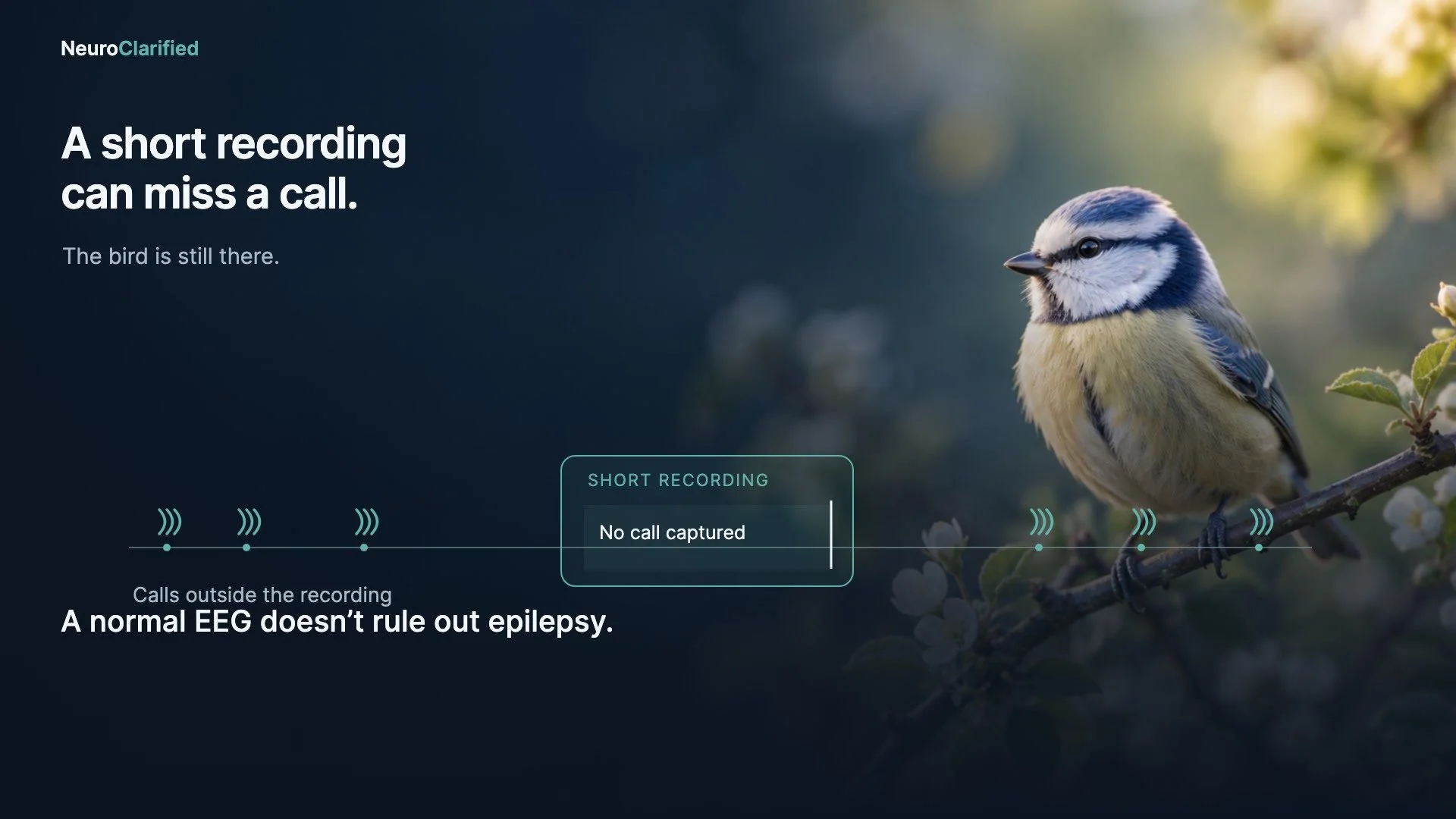
A bird and a timeline showing calls outside a short recording window, with no call captured inside it.