Confusion After a Seizure: What to Do When the Shaking Stops
When the shaking stops, care continues
The shaking has stopped, but the person is still confused or sleepy. Learn what postictal recovery means, what you can do to help, and which signs still need emergency action.
Dr. Shailesh Male, MD
Board-certified neurologist. NeuroClarified explains complex neurological conditions and treatments in clear, clinically grounded language.
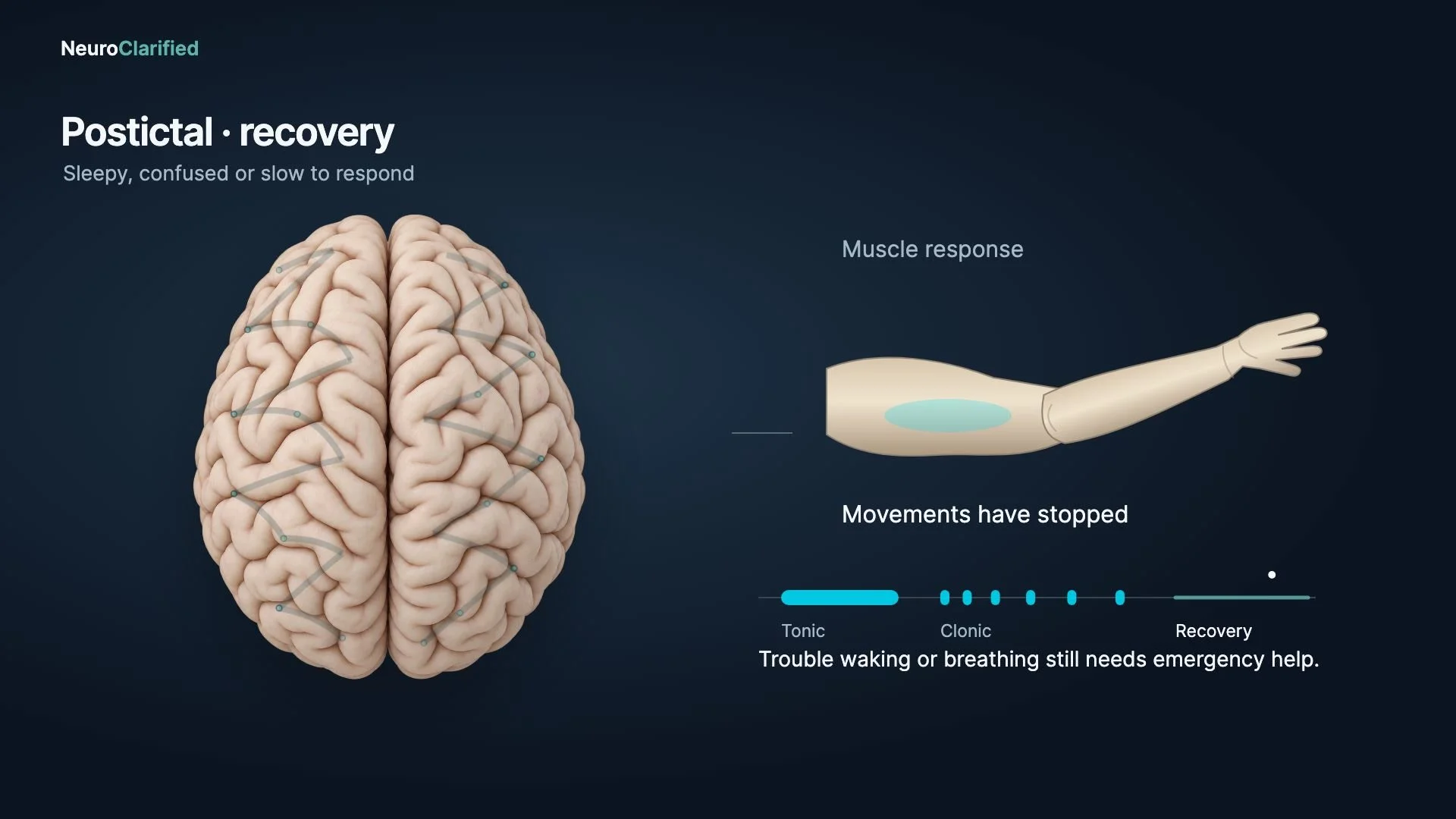
A brain and relaxed arm beside a tonic, clonic and recovery timeline. Text explains that movements have stopped but the person may remain sleepy, confused or slow to respond.
Key takeaways
- The shaking can stop before someone returns to their usual level of alertness.
- Sleepiness, confusion and slow responses can occur during postictal recovery.
- Trouble breathing or waking still needs emergency help. Do not assume reduced responsiveness is simply recovery.
Why can confusion continue after the shaking stops?
After a tonic-clonic seizure, the person may still be sleepy, confused or slow to respond. The brain needs time to recover. This is called the postictal period.
The end of the visible movements and the return to clear thinking are different things. Recovery varies, so the word “postictal” should not become a reason to ignore trouble waking or breathing. The Epilepsy Foundation describes the recovery phase and its possible symptoms.
What should you do while they recover?
Check responsiveness and breathing when jerking stops, or immediately if there is no jerking.
If an adult is unresponsive and is not breathing normally—or is only gasping: call 911, start CPR and use an AED if available. Put the phone on speaker and follow the dispatcher's instructions. See the American Heart Association's adult basic life support guidance.
If they are breathing normally but are not fully awake, gently turn them onto their side when safe. For a suspected serious neck or back injury, call 911 and follow dispatcher guidance about moving them.
Stay with them, keep checking breathing and give nothing to eat or drink until fully alert. As they become alert, explain simply what happened and offer reassurance. The Epilepsy Foundation offers practical guidance on helping after a seizure.
When should you call 911?
Call for a first seizure or unknown seizure history, even if the shaking has stopped. Also call for trouble breathing or waking, a seizure lasting more than five minutes, another seizure soon afterward, injury, a seizure in water, pregnancy, or diabetes with loss of consciousness.
For known epilepsy, follow the seizure action plan. These emergency reasons still apply. The CDC lists the emergency call criteria.
What should a witness tell the medical team?
Describe what happened before, during and afterward. Note when the movements began and stopped, and what the person's responsiveness and breathing were like afterward. Plain observations are useful; you do not need to name the seizure type.
Confusion afterward can support a seizure diagnosis, while a quick return to clear thinking can point toward a faint. Neither finding settles the diagnosis. An unexplained blackout still needs prompt medical assessment, even after a quick recovery.
Plan support before the next emergency
Work with the treating team on a written seizure action plan: what to do, when to get help and how to use rescue medication if prescribed. Learning those instructions ahead of time gives family members a practical way to support safety and independence. The Epilepsy Foundation provides seizure action-plan resources.
By Dr. Shailesh Male, board-certified neurologist. AI-assisted illustrations are used for education. This article provides general information, not individual medical advice. For a medical emergency, call 911.